
TMD/TMJ Disorders and Treatments
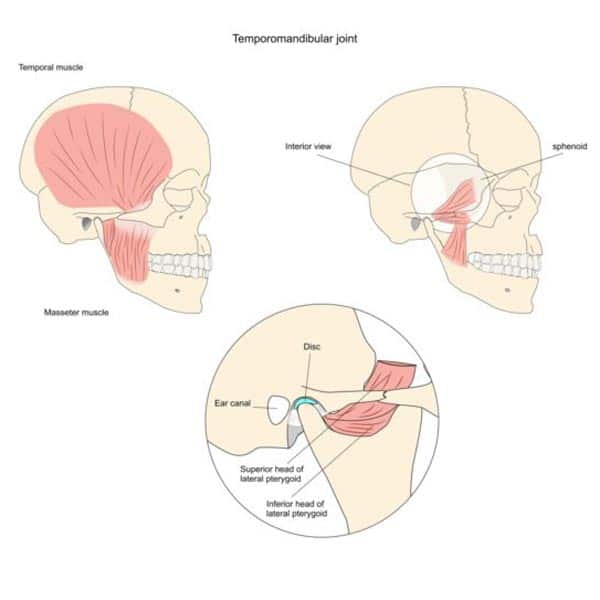
Your temporomandibular joint (TMJ) is just below your ears on either side of your face and attaches your mandible, or lower jaw, to your skull. The TMJ is a sliding hinge joint that moves up and down, side to side, and back to front. As with any joint, you have several adjacent muscles that help support and move the joint, along with cartilage that acts as a shock absorber between the bones.
A Practice Built Around You
With temporomandibular joint disorder, or TMD, the joint and/or the surrounding muscles do not function properly. This lack of proper functioning can be due to dislocation of the cartilage, an injury or dislocated jaw, misaligned teeth or bite, teeth grinding, or arthritis in the jaw joint.
Stress is one of the main causes of TMD. Stress causes your facial muscles to clench up, causing them to be overused. Stress can also lead to teeth grinding in your sleep which further strains the jaw joint and overuses the muscles. One of the best ways to combat TMD is to pay attention to your stressors and reduce them as much as possible.

Do I have TMD?
If you are experiencing pain in the jaw joint, earaches, pain when you chew or yawn, pain in your face or neck, stiff muscles in your jaw, or notice a change in your teeth’s alignment, then you may have TMD. While clicking and popping can also be possible symptoms if accompanied by other symptoms, they themselves are not considered symptoms of TMD. Other possible indicators include: headaches, neck aches, pain in the upper shoulders, dizziness, and ear problems such as earaches, ringing, or hearing problems.
When should I see a dentist regarding my TMD?
If you are experience constant jaw pain, have a swollen jaw or face, cannot open or close your jaw completely, notice your teeth not fitting together normally, or have a headache or neck ache, then you should visit our office immediately. Other possible signs that you may need to visit Dr. Sammons and Dr. Laurent include: jaw pain that has not subsided in two weeks, chronic jaw pain, notice clicking or cracking sounds with your pain, or if you have been experiencing high levels or stress or anxiety caused by your jaw pain. If you believe you may have TMD, schedule a consultation with Dental Artistry today!
How will Dr. Sammons and Dr. Laurent diagnose TMD?
To accurately diagnose TMD, our dentists will perform a physical examination focused on feeling your jaw while opening and closing, evaluating your range of motion, and locating any areas of pain around the jaw joint. Imaging techniques such as x-rays, a CT scan, or an MRI may also be used to look further into the joint.
Are TMD and bruxism related?
Bruxism, or teeth grinding, can exacerbate TMD symptoms and place extra strain on the jaw joint. Many people grind their teeth at night and are unaware they do this. To combat this issue, our dentists can fit you for a mouth guard to wear at night that will prevent teeth grinding.
Bruxism is not the only habit that can worsen TMD symptoms though. Habits such as nail biting, chewing on pens, cuticle biting, or teeth clenching due to stress can also place strain on your jaw joint and increase your TMD symptoms.
Can TMD cause tooth pain, sinus problems, vertigo, dizziness, or tinnitus?
Yes. Although TMD is localized in the jaw, it can also affect the surrounding structures and cause symptoms to affect more than just the jaw.
Tooth pain: Your teeth can become sensitive if they are misaligned and are withstanding uneven pressure or if they are withstanding constant pressure as a result of clenching or grinding.
Sinus problems: Your sinuses and your TMJ are closely related and can cause each other problems when either one has issues. In the case of TMD, the pain felt in your jaw can radiate into your sinuses, causing you to feel sinus pressure and pain.
Will TMD go away?
Generally, TMD will flare up for a period of time and then go away for a period of time. For most people, TMD will not progress and will simply need to be managed during periods when it is active. For others, however, symptoms may continue to worsen and constant intervention is needed. Some common things that can trigger TMD symptoms include: stress, tough foods, weather changes, teeth grinding, or other habits.
How is TMD treated?
There are a few different options that can be used to treat and manage TMD. These options include:
See The Difference
Smiles designed for confidence
Comfort in every detail · Confidence in every smile